1 hour ago
20
Despite the name, facials aren’t limited to just your face; in fact, they can benefit your scalp, too. The Korean scalp facial is the latest in a long line of trending K-beauty routines, and for good reason: Those who’ve tried it rave about how it benefits their overall hair and scalp health.
To find out more about what a Korean scalp facial does, I spoke to Madeline June, a board-certified nurse practitioner specializing in cosmetic dermatology and aesthetic medicine at The Well Westlake, and Christina Kim, a board-certified esthetician and founder of dupï studio. I also compiled a list of expert- and NBC Selected editor-recommended cleansers, exfoliants, conditioners and treatments you can use to get one at home.
Want more from NBC Selected? Sign up for our newsletter, The Selection, and shop smarter.
The best Korean scalp facial products
Best shampoo
Cleansers in a Korean scalp facial should be able to remove buildup without stripping the scalp, says June. This shampoo comes recommended by dermatologists in our guide to K-beauty hair because it’s stimulating and gentle. It has biotin to help reduce breakage and rosemary oil to stimulate blood flow to your scalp, which brings more nutrients to your hair follicles and helps grow out your hair, according to the brand. It’s free of parabens, sulfates and silicones, and it’s safe for color-treated hair.
Best scalp scrub
A gentle scalp exfoliant is a key step in a Korean scalp facial, and this Aromatica scalp scrub helps to detox your scalp by removing dead skin cells and oily residue. It has rosemary leaf extract, which helps to reduce itchiness and dryness and stimulates blood flow to help your hair grow healthier, according to the brand. It also has natural sea salt, which removes dead skin, making it great for dry, flaky scalps.
Best liquid exfoliant
If you’re not a fan of physically exfoliating your skin, a liquid exfoliant is a great alternative to a scrub. This one is made to help balance your scalp’s oiliness and remove sebum, dead skin and other buildup, according to the brand. You can apply it directly to your scalp before shampooing, massaging it in gently, and rinse it out as normal. It also has rosemary extract to stimulate your scalp, along with vitamin E and citric acid to help soothe the skin.
BETA

Best conditioner
Conditioners help to strengthen and add moisture back to your hair after shampooing, and this one from Ryo is designed to reduce breakage and thicken hair, according to the brand. It has caffeine extract to reduce hair loss and Korean ginseng to help treat signs of aging on the scalp, according to Ryo. It’s also free of mineral oil, fragrance and sulfates, is also pH-balanced to help protect your scalp’s biome, making it great for sensitive skin. It’s also free from mineral oil, fragrance and sulfates.
Best hair serum
Ampoules are highly-concentrated serums that are very popular in the K-beauty world. This ampoule in particular is great for dry or irritated scalps because it has an exosome complex that helps keep your hair and scalp moisturized, according to the brand. NBC Selected reporter Zoe Malin loves how easy the serum is to apply; it has a built-in, gua sha-inspired scalp brush that helps you massage the serum deeper into your scalp and roots. The brush has comb-like bristles that Malin says makes it easy to work through her hair, and she likes that the twist-top keeps too much product from spilling out. For best results, use one to two times daily before styling on either wet or dry hair.
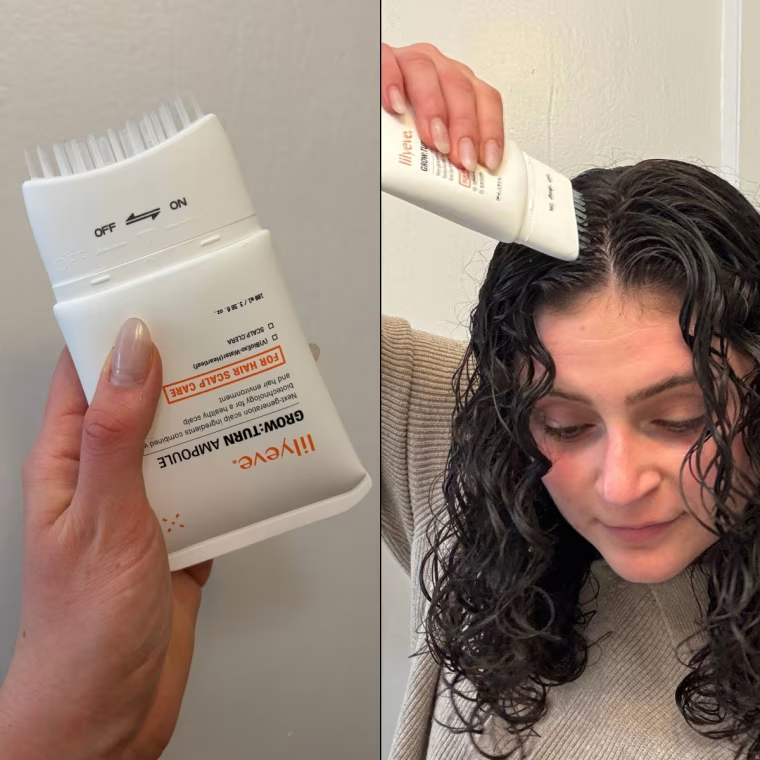 Courtesy of Zoe Malin
Best scalp mask
Although most conditioners are best concentrated on the lengths and ends of your hair, Kim suggests using this mask specifically for treating your scalp. It has biotin, hydrolyzed keratin and peptides to help strengthen strands and improve hair elasticity, which is your hair’s ability to stretch and bounce back into shape, according to the brand. It also includes amino acids to help retain moisture, and can be used daily since it’s lightweight, making it especially good for dry or thinning hair.
Best hair finishing oil
This Mise en Scene option is a great finishing oil to use on your hair before styling it because it doubles as both a moisturizing oil and a heat protectant. It can protect your hair against heat up to 446 degrees Fahrenheit, according to the brand, and it has seven kinds of oils, including olive, coconut and jojoba, to moisturize. It’s also lightweight enough to prevent any greasy residue, layers well with other products and works for all hair types.
Best scalp leave-in oil
This scalp leave-in serum from Dr. Groot, one of our favorite K-beauty hair care brands, helps keep your scalp hydrated between washes. It has biotin and rosemary oil to strengthen and thicken your hair from the roots, plus it works for all hair types. It’s highly rated with a 4.5-star average rating from nearly 200 reviews at Sephora, and reviewers say the oil is lightweight, non-greasy and doesn’t leave any residue.
Best scalp massager
Scalp massages are great for supporting your follicle health, and this gua sha tool is made from a smooth, natural jade that helps to massage products deeper into your skin. It also helps stimulate blood flow and release tension around your scalp. The brand recommends dividing your hair into sections after washing and drying, then massaging the product into your scalp using long, gentle strokes of the tool.
What is a Korean scalp facial?
A Korean scalp facial is basically a skin care-focused treatment for the scalp, according to my experts. “A Korean scalp facial applies the same principles used in Korean facial care, including gentle exfoliation, hydration, barrier support and massaging, but to the scalp,” says Kim. “This is often described as the ‘skinification’ of scalp care because the scalp is skin and deserves more than shampoo alone.”.
Depending on the treatment, scalp facials can address issues like product buildup, excess oil, dry or flaky skin, congestion around the follicles and scalp irritation, says June. “It’s less about treating the hair shaft itself and more about caring for the skin underneath the hair,” she says.
However, despite its usefulness when addressing scalp and skin support, Kim warns against using Korean scalp facials as a substitute for medical treatment. “It’s not a medical treatment for hair loss, psoriasis, seborrheic dermatitis or other scalp disorders,” she says. “Sudden shedding, painful inflammation, sores or persistent scaling should be evaluated by a dermatologist.”
How to do the Korean scalp facial at home
Below are the steps for a Korean scalp facial you’d get at a spa or hair salon, according to my experts. Although not all steps are necessary for an at-home treatment (for example, the scalp analysis step), you can still do most of these from the comfort of your home using the right products.
- Scalp analysis: During this step, the scalp is examined to look at oiliness, dryness, buildup, flaking or irritation and determine what type of treatment is appropriate, says June. (More on scalp facials and different scalp types below.)
- Pre-cleanse or oil treatment: Prior to cleansing, some treatments begin with a lightweight oil or scalp treatment to help loosen buildup and condition the scalp.
- Scalp cleansing: Use a gentle scalp shampoo (which are shampoos with ingredients targeted toward scalp health, like salicylic acid and rosemary extract) to remove oil, sweat and product buildup without stripping the scalp of its natural moisture.
- Exfoliation: Following the cleansing, a scalp exfoliant is used to gently remove dead skin cells and buildup around the hair follicles. “This step should be gentle, since aggressive scrubbing can irritate the scalp,” says June. Some common exfoliating ingredients include salicylic acid, tea tree oil and peppermint extract.
- Scalp treatment or mask: Depending on your specific needs, you can use a hydrating, soothing or balancing treatment. For example, if you’re looking to hydrate a dry scalp, look for barrier-supporting ingredients like glycerin, panthenol, beta-glucan ceramides or urea, says Kim.
- Scalp massage: Both June and Kim emphasize the importance of massaging your scalp, which helps distribute the products on your scalp. At her studio, Kim’s dry scalp facial focuses heavily on massage, which she says helps release tension around connected areas of the neck, shoulders, temples and scalp fascia, while also adding on lymphatic techniques and hitting acu-pressure points. “This prepares the client to relax and acknowledges that scalp tightness can be connected to tension held elsewhere,” she says.
- Rinse and conditioning: After the massage, thoroughly rinse the products from your hair and use a conditioner or deep conditioner as needed, says June.
- Final scalp or hair treatment: Finally, you can finish the treatment with a lightweight serum, tonic or leave-in product, which June says can help hydrate and soothe your scalp.
How often should you do a scalp facial at home?
How often you do a scalp treatment will depend on your scalp issues and what you use to treat them. However, June says that every four to six weeks is a reasonable amount for a healthy scalp. “At home, gentle cleansing can be part of your regular hair routine, while exfoliation should be much less frequent, often around once every one to two weeks if your scalp tolerates it,” she says. Kim agrees, and says that over-cleaning, over-exfoliation and excessive manipulation can actually result in worsening your scalp issues. “The best routine is one that keeps the scalp consistently comfortable, hydrated and balanced,” she says.
Frequently asked questions
Every hair type can benefit from a Korean scalp facial, experts say. But keep in mind, the products you use will vary depending on what your scalp concern is.
- If you have an oily scalp, June suggests products that help clear buildup and exfoliate the scalp with ingredients like salicylic acid, glycolic acid and fruit enzymes and extracts.
- Those with dry or sensitive scalps may benefit more from gentle cleansing and hydration, says June. This includes products with moisture-friendly ingredients like panthenol, ceramides and exosomes.
- Textured/color-treated hair usually also needs products that help hold more moisture in the scalp and strands, says Kim. Look for humectants like glycerin, along with oils like jojoba and coconut oils to help seal in moisture.
The biggest difference between Western and Korean hair treatments is in the focus on skin health. “Traditional Western hair treatments tend to focus more on the hair fiber itself, including things like repairing damage, adding moisture, reducing frizz or improving shine,” says June. Meanwhile, Korean philosophies on skin and scalp care are much more prevention-focused, says Kim. “Instead of aggressively stripping away every trace of oil, the intention is to cleanse thoroughly while preserving hydration and supporting the scalp barrier,” she says.
Lymphatic massages help to release tension through the connected areas of neck, shoulders, temples and scalp-fascia, which helps relieve tightness around the scalp, says Kim. The pressure should be gentle and controlled to prevent irritation. The massages can also help stimulate blood flow to your hair follicles and help hair grow, experts say.
Meet our hair and scalp experts
At NBC Selected, we work with experts who have specialized knowledge and authority based on relevant training and/or experience. We also take steps to ensure all expert advice and recommendations are made independently and without undisclosed financial conflicts of interest.
- Madeline June is a board-certified Nurse Practitioner specializing in Cosmetic Dermatology and Aesthetic Medicine at The Well Westlake.
- Christina Kim is a board-certified esthetician and founder of dupï studio.
Why trust NBC Selected?
I am an associate SEO reporter for NBC Select, covering skin care, wellness, and more, including stories on how to pick the best Korean beauty ampoules for your skin type and how Korean hair care differs from Western approaches. For this story, I spoke to a board-certified dermatologist about everything you need to know about the Korean scalp facial, including the steps involved in doing one of your own at home.
Catch up on NBC Selected’s in-depth coverage of tech and tools, wellness and more, and follow us on Facebook, Instagram, Twitter and TikTok to stay up to date.